
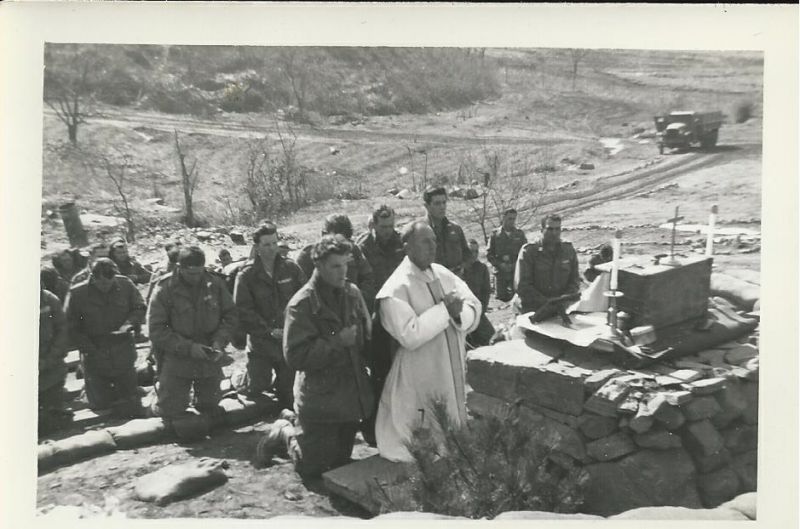
Going through some of the essays I wrote in graduate school while completing an MA in Theology at Duquesne University (2014) I came across this piece that seems appropriate during this year of Eucharistic Revival in the Church.
Eucharist and Ethics: Lex Orandi, Lex Credendi, Lex Vivendi
James K. Hanna
Much has been said and written about the Eucharist as anticipation of the eschaton, but what of anticipation of the sacrament itself? A question for my fellow Roman Catholics: if you could receive the Eucharist only once how would you prepare for this once-in-a-lifetime opportunity? It is an interesting question and one worth sober meditation or discussion. It is a question with significant theological and catechetical implications and can lead to fruitful contemplation and stimulating conversation. In our post-modern world there appears to be distressingly little discussion on preparation for the sacrament which the Church calls “the source and summit of our Christian life”.[1] The question, while interesting and valuable, is lacking. It is deficient in that it addresses only our preparation, or approach to the reception of the sacrament, which is only one of three important aspects of Eucharist I wish to explore. The question does not directly address the actual encounter with the sacrament, or the response of the communicant following reception.
In this paper I will address all three aspects: preparation, reception, and response; each of which I propose has credible ethical dimensions. In this discussion I will place a special emphasis on Eucharist viewed as a gift; a gift requiring a response. In looking at such symbolic exchanges, author Glenn Ambrose (nota bene: later references to Ambrose are to this author, not to the doctor of the Church) in The Theology of Louis-Marie Chauvet, references anthropologist and ethnologist Claude Levi-Strauss and sociologist Marcel Mauss. Levi-Strauss sees these three aspects as “cognition-recognition-praxis”, while Mauss parallels with “scripture, sacrament, and ethics”[2]. I will use a combination of these understandings to propose how Scripture and sacred writing can foster preparation, and how the sacrament nurtures praxis. My thesis, then, is that the Sacrament of Eucharist incorporates both orthodoxy and orthopraxis; that though the ritual-liturgy ends, the sacrament maintains a continuous cycle of anticipatory preparation, reception, and response. I intend to demonstrate that Eucharist is a gift that is given by God to His church, the Mystical Body of Christ, and as such descends to us; and that this gift necessitates a response that is both vertical and horizontal; vertical inasmuch as we give thanks to God for this gift, and horizontal in that our gratitude finds it’s earthly praxis in love of neighbor. My emphasis will be on the response toward neighbor and the ethical dynamic of this response. The Jesuit theologian Clifford Howell has written “If worship is genuine and sincere it must produce good behavior. If children genuinely love their father and are sincere when they praise him and thank him for all he does for them, they cannot fail to do the things that please him. So also we are fully conscious of what we are doing when we worship God, and if we really mean what we say in our prayers, then we are sure to lead lives pleasing to God.”[3] It is with such consciousness that we should be anticipating the Holy Mass.
Preparation
When one thinks of anticipation other words or images may come to mind; perhaps expectation, hope, and eagerness, all of which are entirely appropriate when approaching the Eucharist. What are our expectations? What is the reason for our hope? What are we eager for? How do we prepare for reception of the Eucharist?
I begin with a reminder that what we are preparing for is the zenith of the Holy Mass: a “personal encounter with the Lord Jesus in the sacrament,”[4] so there is recognition that our preparation should consider not only “what” we are preparing for but also “who” we are preparing for.
Secondly, let us acknowledge that the Eucharist is a gift. French theologian Jean-Luc Marion reminds us that “A gift and this one above all, does not require first that one explain it, but indeed that one receive it. Does not the haste to explain disclose an inability to receive and hence the loss of a primordial theological reflex?”[5] Though we are cautioned by Marion on the need to explain the gift of the Eucharist, a brief clarification is prudent. I would like to propose a mediation of two viewpoints: that of Marion with that of fellow theologian Louis-Marie Chauvet.
The merger of perspectives results in a recognition of the present, meaning gift, descending vertically in an Christological way. This present is of the presence, as in the Real Presence, but with recognition of the absence of Christ. Marion uses the Emmaus story to illustrate. “… at the very moment of his recognition by the disciples, the Word in flesh disappears: ‘for it is to your advantage that I go away’ (John 16:7). For what? So that the Word recognized in Spirit, recognized by and according to the Spirit, should become the site where those might dwell who live according to the Spirit, his own received from the Father. In fact, the Word, at the Eucharistic moment, does not disappear so much as the disciples, who eating his body and drinking his blood, discover themselves assimilated to the one whom they assimilate and recognize inwardly … They enter into the place of the Word, and now, like him, they go up to Jerusalem (Luke 24:33 = Matthew 16:4).”[6]
For both Marion and Chauvet the doctrine of transubstantiation is important, though Chauvet is quite intent on recognizing that God cannot be contained, and cautions against “an idolatrous distortion of the theology of transubstantiation which makes God present as if a thing.”[7] While both Marion and Chauvet are concerned about seeing Eucharist as gift and as icon, Chauvet seems more anxious about our individual response to the gift, as he sees the Eucharist in terms of a symbolic exchange. Ambrose points out that for Chauvet, “There is the gift, its recognition and a return gift. All three elements are integral to an understanding of Eucharist as an event of God’s action and our response.”[8]
So where does this leave us regarding preparation for the sacrament? Seeing Eucharist in this blended vision of Marion and Chauvet should lead us to a certain preparation in anticipation of reception of the Gift, a preparation that recognizes not only the grace and gift we are to receive but also our obligation of a response. This preparation, indeed the anticipation itself, has a sacramental nature, so we may recall other sacraments we have received. In fact, “The other sacraments, and indeed all ecclesiastical ministries and works of the apostolate, are bound up with the Eucharist and are oriented toward it. For in the blessed Eucharist is contained the whole spiritual good of the Church, namely Christ himself, our Pasch.”[9] I propose that precisely as the liturgy of the Word is intimately connected to the liturgy of the Eucharist one might consider some form of lectio divina before entering “into the place of the Word” and going up to Jerusalem. One way to do this is by reflecting on other sacramental encounters. This formula of preparation provides enormous space for the Holy Spirit.
When considering other sacramental experiences we begin at the beginning with Baptism and not only our baptismal promises, but also the fruits of one’s Baptism. Enrico Mazza, in Mystagogy: A Theology of Liturgy in the Patristic Age recalls John Chrysostom (c. 345-407) and his enumeration of these benefits: “Using a very effective literary device (‘not only free, but also holy, not only holy …’) he names ten effects that he arranges in a progressive order. Human beings were formerly captives of sins, but now they are free, holy, just, sons and daughters, heirs, brothers and sisters of Christ, joint heirs, members, temples, and instruments of the Spirit.”[10] Notice that for John Chrysostom only one of the ten fruits of baptism – heirs – has an eschatological emphasis, while the remaining nine have an application to our daily life and behavior, leading one to imitatio Christi and hence ethical conduct.
These are the fruits of baptism, but what of the sacrament of Confirmation? In preparation to receive the gift of Eucharist perhaps it would be wise to recall other gifts, specifically the gifts of the Holy Spirit as enumerated in Isaiah 11:2-3: “The spirit of the LORD shall rest upon him: a spirit of wisdom and of understanding, a spirit of counsel and of strength, a spirit of knowledge and of fear of the LORD, and his delight shall be the fear of the LORD.” Again, our response to reception of these gifts takes on an ethical flavor, for as the current Catechism of the Catholic Church states “The moral life of Christians is sustained by the gifts of the Holy Spirit. These are permanent dispositions which make man docile in following the promptings of the Holy Spirit.”[11]
Finally, in preparation, what shall I say of Penance and Reconciliation? Today, many Catholics have nearly abandoned the confessional, in fact an article in one national Catholic newspaper referred to it as “the disappearing sacrament.”[12] The author of that article, Ed Conroy, recalls what most Catholics remember about the confessional, that it is a place to confess sins. However, he fails to mention what most of us forget: the sacrament is a devotion and a means of spiritual growth, as well as an opportunity to receive grace leading to conversion and discipleship, again imitatio Christi. While certainly the sacrament of Penance and Reconciliation anticipates the Last Judgment, the more immediate effect is that the penitent is implicitly drawn to reception of the Eucharist.
Encounter
As we encounter the Gift of Eucharist, there are two notions I wish to explore. First, Marion’s presence-as-absence referred to above and secondly, a brief explanation of Chauvet’s view of Eucharist, especially as “thanks – giving”. Both viewpoints help illustrate the ethical dimension of our encounter with, and reception of Holy Communion.
Returning to Marion’s use of the Emmaus story and the ensuing disappearance of Christ, we find in his interrogative reply to John 16:7, “For what?”[13] , he is asking why the absence of Christ is advantageous. Marion answers, as above, using the term “assimilation” in both an exterior and interior mode: “… assimilated to the one whom they assimilate … inwardly …”[14] In Marion’s view it would appear wholly appropriate to see the reception of Eucharist not only as consumption but also that the communicant is “consumed” by the Eucharist. Indeed, a linguistic analysis of the very word communicant would seem to necessitate such a conclusion. It would seem such a deduction most assuredly leads us to a response of imitatio Christi.
Chauvet, for his part, focuses on the two actions of breaking and sharing of the bread during the Mass. As Ambrose states, “He recognizes the Eucharist as the ‘paradigmatic figure of the presence-of-the-absence of God’.”[15] As for Emmaus, it is in the breaking of the bread at Mass where Chauvet finds the place where “Christ allows himself to be recognized as at Emmaus.”[16] Chauvet also allows for assimilation similar to Marion’s but extends the incorporation to the gathered community. “The mode of Christ’s presence that Chauvet is talking about here is the ecclesial body, which is none other than ‘our holy and living sacrifice.’ Therefore, in receiving the gift of God’s very self in the mode of oblation to others, the Christian community hopes to ‘be what it sees and receive what it is’.”[17] Does this not echo the great commandment to love God and neighbor?
Further, in Chauvet’s theology, since the grace of God is not a “graspable object”[18], he sees the gift of the sacramental body of Christ as a gift that demands a return gift, and therefore, reception as an act of dispossession. Hence, even though Eucharist literally means thanksgiving, Ambrose, in his treatment of Chauvet hyphenates the word (thanks-giving) to highlight this. “This giving is directed both vertically towards God and horizontally towards the neighbor … it is a giving that is attentive to the other and therefore constitutive with a decentering of the subject and an overcoming of onto-theology.”[19] For Chauvet, overcoming onto-theology is akin to “He must increase; I must decrease” (John 3:30), wherein the community seeks to imitate Christ always and in all ways in its own holy and living sacrifice. This is not simply the Christian life, but rather a distinctive configuration of the Christian life; in Sacramentum Caritatis Benedict XVI uses the phrase “eucharistic form of the Christian life.”[20] Benedict continues in the same Apostolic Exhortation by repeating a portion of his encyclical Deus Caritas Est: “Worship itself, eucharistic communion, includes the reality of both being loved and of loving others in turn. A Eucharist which does not pass over into concrete practice of love is intrinsically fragmented.”[21] The resultant love of others finds its praxis not in a purely didactic way but in “a joy-filled discovery of love at work”[22] which finds its praxis in day-to-day living between this liturgy and the next – the in-between time that Ambrose calls the “liturgy of neighbor”, or “lex agendi”.[23]
Chauvet’s eucharistic theology is entirely consistent with what Benedict has outlined.
This consistency is found in the recognition that corporeality is the place of God. Ambrose writes “We must not then restrict God’s presence to the proclamation of the Word or to canonically prescribed liturgical and sacramental activities.”[24] Here then is a return to the presence-as-absence. We are to fill the void left by the absence of Christ; we are to be his hands and feet in our actions. As I once heard someone say, “God doesn’t want us to do his job, only his work.” In the theology of Chauvet this response to the gift of Eucharist finds its genesis in the second epiclesis of Eucharistic Prayer III: “Grant that we, who are nourished by the Body and Blood of your Son and filled with his Holy Spirit, may become one body, one spirit in Christ.” So we become a “Eucharistic people” as Ambrose says when he incorporates a quote from Chauvet’s Symbol and Sacrament by “acknowledging ourselves as ‘from others and for others by recognizing ourselves to be from God and for God.’ ”[25]
Response
What is meant by “nourished” in the sacramental sense of the word? For guidance I would like to return to John Chrysostom as well as his patristic counterpart Theodore of Mopsuestia (c. 350-428). For Theodore’s part, his eucharistic theology has a nutritional value that bolsters us: “The body and blood of our Lord and the grace of the Holy Spirit that is given to us thereby will win us help to do good works and will strengthen our (good) dispositions.”[26] John Chrysostom likewise holds a eucharistic theology that both energizes and protects us. With wondrous imagery he writes: “Let us come away from that table like fire-breathing lions of whom the devil is afraid. If you show him a tongue stained with the precious blood, he will not be able to make a stand; if you show him your mouth all crimson and ruddy, cowardly beast that he is, he will run away.”
In my view, these early church perspectives, beautifully presented as they are, find consistency with both Marion and Chauvet. They temper the concern Marion and Chauvet have for icon vs. idol. John Chrysostom and Theodore have us casting our gaze on both the Crucifix and the Host in such a way that we do not see either as a “thing.” We see beyond and what is seen is God’s unconditional love, limitless mercy, and bountiful generosity, and not only seen, but embraced and embodied. We are not only nourished in the Eucharist but emboldened by the Spirit.
Ite missa est. Having been fed we are now sent forth, but repeating Marion’s Emmaus question: For what? We find one answer, suggestive of the second epiclesis quoted above, from Benedict XVI: “The union with Christ brought about by the Eucharist also brings newness to our social relations; this sacramental mysticism is social in character. This relationship between the eucharistic mystery and social commitment must be made explicit. The recognition of this fact leads to a determination to transform unjust structures and to restore respect for the dignity of all men and women, created in God’s image and likeness. Through the concrete fulfillment of this responsibility the Eucharist becomes in life what it signifies in celebration.”[27] Our response to the gift of Eucharist necessarily includes a social “response-ability.” Where does this responsibility find its praxis? While I have written with emphasis on Eucharist let us not forget that in the Holy Mass the liturgy of Eucharist follows the liturgy of the Word. We have heard from the Father, Son and Holy Spirit and have been nourished by Eucharist to act on what we have heard. As Blessed John Paul II wrote in his encyclical Centesimus Annus, “…the social message of the Gospel must not be considered a theory, but above all a basis and a motivation for action.”[28]
Notice the directive “above all” by John Paul II and the term “concrete fulfillment” by Benedict XVI – the first in reference to the Gospel, the latter in reference to the Eucharist – but both referring to social action and the pursuit of justice. This pursuit, and what we have been sent forth to do is the imitatio Christi; this is where we will find the praxis. It is this pursuit where we embrace the directives of Matthew 25:31-46 as well as the eschaton in the “already-not yet” kingdom; where we are not focused solely on personal salvation, but also on care and love of neighbor. In the theology of Chauvet: “The ritual story at each Eucharist, retelling why Jesus handed over his life, sends all Christians back to their own responsibility to take charge of history in his name; and so they become his living memory in the world because he himself is sacramentally engaged in the body of humanity they work at building for him.”[29] This, then, is a return to the theologies of presence-as-absence and of corporeality, where God is found.
It missa est. The liturgy may have ended, but the sacrament continues on in how we live out our lives, indeed in Chauvet’s liturgy of neighbor, the liturgy actually does continue, it is the ritual which has ended. For Chauvet “Liturgy … is the liturgy of our lives, a ‘long priestly liturgy’ that involves both praise and thankful giving in the real world, and not just singing with the angels in some heavenly liturgical sphere.”[30] Chauvet’s intent is not to minimize the ritual liturgy, but to extend it, believing that Christ is as much present in “the real world” as he is in the liturgies of Word and Eucharist.
In summary, the theological and catechetical lesson in this “liturgy of neighbor” is a holistic one of head, heart, and hands. We live joyfully in the present by dedicating our lives to the memory of Jesus the Christ while maintaining hope for the future. Hence, nourished by this one Eucharist we strive for imitatio Christi with reliance on the fruits of our Baptism and the gifts of the Holy Spirit while anticipating the next opportunity to receive the gift and sustenance of the Sacrament. We have come full circle, and this is how we may prepare to receive the Eucharist: by living it!
[1] Second Vatican Council. Lumen Gentium. Pastoral Constitution on the Church in the Modern World. 7 Dec 1965. Ed. Austin Flannery. Northport, NY: Costello Publishing Co., 1996. Print. par. 11
[2] Ambrose, Glenn P. The Theology of Louis-Marie Chauvet. Burlington, VT: Ashgate, 2012. Print. p. 151.
[3] Howell, Clifford. Of Sacraments and Sacrifice. Collegeville, MN: Liturgical, 1952. p. 6
[4] Benedict XVI. Apostolic Exhortation Sacramentum Caritatis: Sacrament of Charity
[5] Marion, Jean-Luc. God Without Being. Trans. Thomas A Carlson. Chicago; University of Chicago Press, 1982. Print. p. 162.
[6] Ibid., p. 151.
[7] Ambrose, p. 135.
[8] Ibid., p. 138
[9] Second Vatican Council. Presbyterorum Ordinis, Decree on the Ministry and Life of Priests. 7 Dec 1965. Ed. Austin Flannery. Northport, NY: Costello Publishing Co., 1996. Print. par. 5.
[10] Mazza, Enrico. Mystagogy: A Theology of Liturgy in the Patristic Age. New York: Pueblo Publishing, 1989. Print. p. 122
[11] CCC 1830
[12] National Catholic Reporter, February 9, 2007. Print.
[13] Marion, p. 151.
[14] Ibid.
[15] Ambrose, p. 127
[16] Ibid, p 128
[17] Ibid
[18] Ibid., p. 129
[19] Ibid.
[20] Sacramentum Caritatis; par. 82.
[21] Ibid.
[22] Ibid.
[23] Ambrose. p.151
[24] Ibid., p. 155
[25] Ibid., p. 174
[26] Mazza, p. 113.
[27] Sacramentum Caritatis; par. 89
[28] John Paul II. Encyclical Letter Centesimus Annus. (London: Catholic Truth Society, 1991; par. 57
[29] Ambrose. p. 166
[30] Ibid., p. 192
Works Cited
Ambrose, Glenn P. The Theology of Louis-Marie Chauvet. Burlington, VT: Ashgate, 20112. Print.
Benedict XVI. Apostolic Exhortation Sacramentum Caritatis: Sacrament of Charity
John Paul II. Encyclical Letter Centesimus Annus: On the 100th Anniversary of Rerum Novarum
Marion, Jean-Luc. God Without Being. Trans. Thomas A. Carlson. Chicago: University of Chicago Press, 1982. Print.
Mezza, Enrico. Mystagogy, A Theology of Liturgy in the Patristic Age. Trans. Matthew J. O’Connell. New York: Pueblo Publishing, 1989. Print.
Second Vatican Council. Lumen Gentium. Pastoral Constitution on the Church in the Modern World. 7 Dec 1965. Ed. Austin Flannery. Northport, NY: Costello Publishing Co., 1996. Print.
Second Vatican Council, Presbyterorum Ordinis, Decree on the Ministry and Life of Priests. 7 Dec 1965. Ed. Austin Flannery. Northport, NY: Costello Publishing Co., 1996. Print.
 James K. Hanna